Senior Secondary Streams
Science, Commerce and Arts programs designed for board success and future career pathways.

Science Stream
The Science stream develops analytical thinking, observation, experimentation and problem-solving skills. Students study subjects such as Physics, Chemistry, Biology, Mathematics and Computer Science according to their chosen combination. Classroom learning is supported with practical work, numerical practice, diagrams, laboratory understanding and regular assessment so that students can prepare confidently for board examinations and competitive pathways in engineering, medicine, defence, technology and research.
Commerce Stream
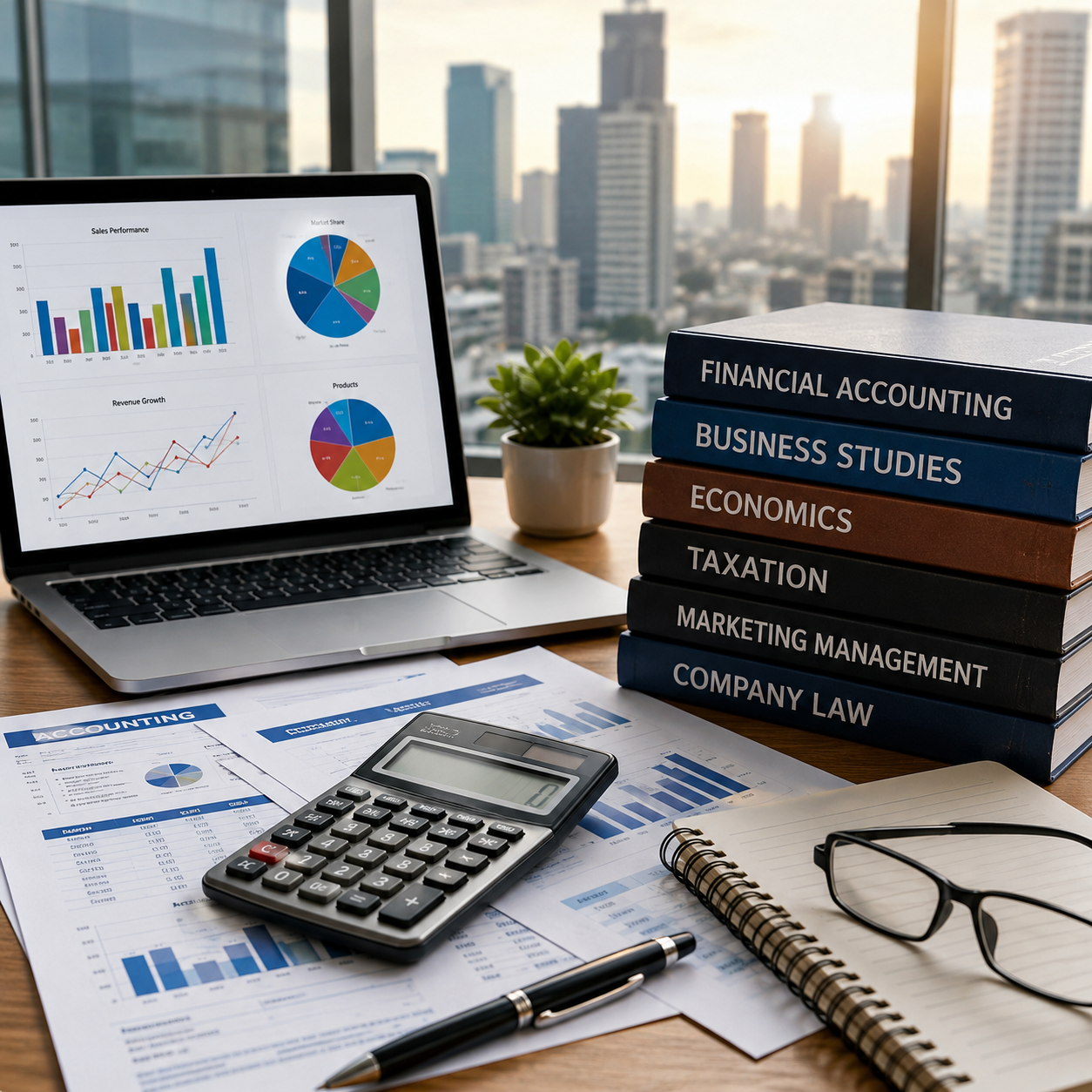
The Commerce stream helps students understand business, accounts, economics, finance and entrepreneurship. Learners are guided to build accuracy in accountancy, clarity in economic concepts and confidence in business studies. The program connects textbook concepts with real-world examples such as banking, trade, markets, taxation and management. It prepares students for careers in commerce, chartered accountancy, management, banking, administration and professional business courses.

Arts Stream
The Arts stream builds understanding of society, language, history, culture, governance and human behaviour. Students are encouraged to read, discuss, write and express ideas with clarity. The stream develops communication, critical thinking, creativity and awareness of current issues. It is suitable for students interested in civil services, law, teaching, journalism, literature, social sciences, public administration, design and other fields where thoughtful expression and social understanding are essential.

Pre-primary Activity Based Curriculum
The early years are the foundation of a child's learning journey. Our Nursery to Prep curriculum focuses on joyful, activity based learning where children learn through stories, rhymes, picture reading, clay work, colouring, music, movement, games and guided classroom interaction. This method helps children develop language, listening, observation, memory, motor skills, social behaviour and confidence.
At this stage, children need a safe and cheerful environment where they can explore, speak freely and learn by doing. The school provides an activity room for kids, giving them space for creative play, educational toys, group activities and sensory learning. These experiences prepare children for formal schooling while keeping their curiosity and happiness alive.
21st Century Curriculum with Digital Content
From Class 1 to Class 8, the school follows a balanced curriculum that strengthens language, mathematics, science, social studies, computer education, general knowledge, moral values, art, sports and life skills. The focus is on concept clarity, reading habits, written expression, mental maths, scientific curiosity and responsible classroom behaviour.
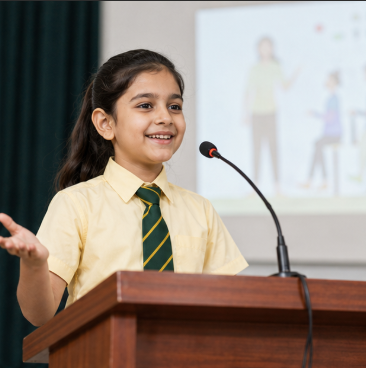
Learning is supported through complete digital content, smart classroom resources, visual explanations, worksheets, quizzes, activities, projects and regular revision. This approach makes lessons more engaging and helps students understand difficult topics with examples, animations, maps, diagrams and practice exercises. Students are trained to ask questions, use technology responsibly, work in teams and build the communication and problem-solving skills needed for modern education.
- Interactive digital lessons and smart classroom support
- Regular assignments, tests and performance tracking
- Project work, activities and skill-based learning

Advanced Level Paper Preparation
For board examination classes, the school gives special attention to syllabus completion, revision planning, writing practice and advanced level paper preparation. Students are guided with chapter-wise tests, sample papers, previous year question patterns, time management strategies and answer presentation techniques. Teachers help students identify weak areas and improve them through doubt sessions and focused practice.
The preparation system is designed to build confidence before the final examination. Regular mock tests, remedial classes, subject-wise assignments and performance feedback help students improve accuracy, speed and presentation. The goal is not only to score well, but also to develop disciplined study habits and examination confidence.